European clients increasingly rely on mobile treasury tools, with payment volumes rising 25% in the first seven months of 2026
LONDON and BARCELONA, Spain, Sept. 17, 2026 /PRNewswire/ -- European companies are increasingly turning to Bank of America's CashPro App to manage time-sensitive treasury tasks. In the first seven months of 2026, clients in the region used the app to approve more than €100 billion in payments, as transaction volume rose 25% and payment value increased 21%[1].
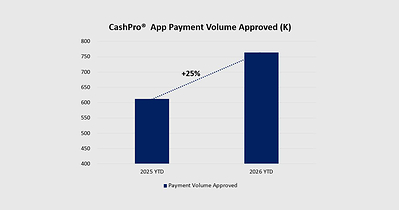
The shift reflects how mobile access is becoming embedded in corporate treasury workflows, particularly for secure authentication and payment approvals. Bank of America has continued to expand the app's functionality and simplify its design so treasury teams can complete more tasks securely from a mobile device.
Mobile becomes the preferred way to access CashPro
CashPro mobile token, Bank of America's mobile authentication solution, replaces the need for a physical token. Together with biometrics, QR Sign-In and push authentication, it enables corporate treasury users to access CashPro and approve transactions securely from their mobile devices.
Across Europe, 74% of CashPro users now choose a CashPro mobile token as their preferred way to authenticate and access the platform, underscoring the growing role of the app in day-to-day treasury management.
"Mobile is an integral part of the daily treasury workflow, giving clients the flexibility to manage critical tasks securely wherever they are," said Matthew Davies, head of Global Payments Solutions EMEA at Bank of America. "The fact that 74% of CashPro users in Europe now choose the app as their preferred security token demonstrates how firmly mobile has become embedded in day-to-day treasury and cash management."
Client feedback shapes the payment approval experience
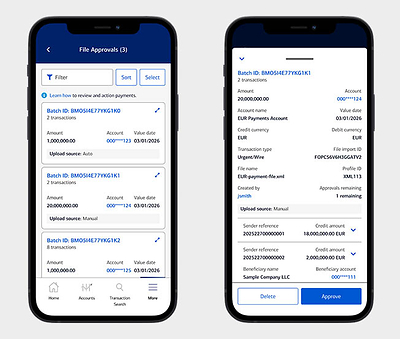
As clients conduct more business through the app, Bank of America recently enhanced the payment approval experience to provide greater visibility into payment details and make approvals more efficient.
The updates were informed by direct input from clients, including those who participate in the bank's CashPro Boards.
"Moving from a physical token to the CashPro App was a natural step for us," said Kunwarjit Singh Suri, EMEA Controller at F5 Limited and a member of the bank's UK CashPro Board. "It gives us the security we need while making it easier to review and approve transactions wherever we are. The new payment approval process is another nice touch making it easier for us to review and approve payments."
Extending secure mobile access
Bank of America is developing new digital identity verification capabilities for corporate administrators, building on the app's cybersecurity protections and patented integrated mobile token.
"Clients around the globe have embraced mobile and continue to ask us to expand what they can accomplish through the app," said Heath Bergman, CashPro App Product Executive at Bank of America. "Their feedback is helping shape our investment as we extend secure mobile access to more treasury workflows."
Frequently asked questions
Question: What is CashPro?
Answer: CashPro is Bank of America's flagship digital platform used by more than 35,000 companies around the globe to manage and monitor their payments, deposits, loans and trade transactions. Through a single, unified experience, CashPro connects companies and institutions to one of the world's largest banking networks – helping them move faster, operate with greater control, and make smarter cash and liquidity decisions globally.
Question: How does CashPro compare against peer offerings?
Answer: For four consecutive years, the CashPro App has been the No. 1 ranked mobile application according to Coalition Greenwich. The broader CashPro platform has also been ranked:
Question: Does CashPro use AI technology?
Answer: Yes. CashPro uses AI technology in the following ways:
Question: What is the CashPro Board?
Answer: CashPro Boards are client advisory groups made up of CashPro users from different client segments and geographic regions. Their purpose is to provide feedback that helps shape the future of CashPro development, investment priorities, and user experience.
Question: What is coming to the CashPro App?
Answer: A new digital identity verification experience for corporate administrators is in development. The update will build on the app's inherent cybersecurity protections and patented integrated mobile token.
Bank of America
Bank of America is one of the world's leading financial institutions, serving individual consumers, small and middle-market businesses and large corporations with a full range of banking, investing, asset management and other financial and risk management products and services. The company provides unmatched convenience in the United States, serving more than 69 million clients with approximately 3,500 retail financial centers, approximately 15,000 ATMs (automated teller machines) and award-winning digital banking with approximately 60 million verified digital users. Bank of America is a global leader in wealth management, corporate and investment banking and trading across a broad range of asset classes, serving corporations, governments, institutions and individuals around the world. As the #1 small business lender in the United States (FDIC), Bank of America offers industry-leading support to approximately 4 million small business households through a suite of innovative, easy-to-use online products and services. The company serves clients through operations across the United States, its territories and more than 35 countries and/or jurisdictions. Bank of America Corporation stock (NYSE: BAC) is listed on the New York Stock Exchange.
For more Bank of America news, including dividend announcements and other important information, visit the Bank of America newsroom and register for news email alerts.
Reporters may contact
Megan Pearson, Bank of America
Phone: +44 207 995 6977
megan.n.pearson@bofa.com
1 Same Period Previous Year (SPPY)
 View original content to download multimedia:https://www.prnewswire.co.uk/news-releases/bofas-cashpro-app-facilitates-more-than-100-billion-in-payments-approved-european-companies-302881220.html

Mercedes-Benz verzeichnet ein zunehmend zweigeteiltes Bild seiner weltweiten Fahrzeugverkäufe. Während die Konzernzahlen im dritten Quartal 2026 global rückläufig waren, meldet die Indien-Tochter ein Rekordquartal. In Indien setzte Mercedes-Benz im Zeitraum Juli bis September 5.422 Fahrzeuge ab, ein Plus von 6 Prozent gegenüber dem Vorjahr und zugleich der beste Quartalswert in der Geschichte des Unternehmens im Land. Von Januar bis September summierten sich die Verkäufe dort auf 15.190 Einheiten, rund 8 Prozent mehr als im entsprechenden Vorjahreszeitraum.
Auf Konzernebene dagegen schrumpften die Auslieferungen im gleichen Quartal. Weltweit setzte Mercedes-Benz 491.700 Pkw und leichte Nutzfahrzeuge ab, ein Minus von 6 Prozent im Vergleich zum Vorjahr. Im Pkw-Geschäft allein sanken die globalen Verkäufe um 8 Prozent auf 407.200 Einheiten. Besonders belastend wirkte die Entwicklung in Asien und hier vor allem in China: In der Volksrepublik gingen die Pkw-Verkäufe um knapp ein Drittel auf 86.800 Fahrzeuge zurück, konzernweit meldete der Hersteller für Asien ein Minus von 25 Prozent auf 132.300 Autos. Ein Zuwachs in Europa und Nordamerika reichte nicht aus, um die Schwäche in China zu kompensieren.
Kontrastreich präsentiert sich auch das Bild in den oberen Preissegmenten. In Indien trugen Top-End-Luxusmodelle – darunter S‑Klasse, Mercedes‑Maybach, EQS Maybach SUV, G‑Klasse, V‑Klasse und AMG‑Modelle – maßgeblich zum Wachstum bei: Diese Klasse legte dort im Jahresvergleich um mehr als 13 Prozent zu und kam auf über ein Viertel des Gesamtabsatzes. Innerhalb dieses Segments nutzten laut Unternehmen fast drei Viertel der Kunden das MANUFAKTUR‑Personalisierungsprogramm. Die Performance-Marke AMG steigerte ihre Auslieferungen in Indien um mehr als 18 Prozent, das AMG G 63 erzielte den höchsten monatlichen Absatz seit Markteinführung. Global hingegen verzeichnete Mercedes-Benz im teuersten Segment aus S‑Klasse, Maybach und AMG ein deutliches Minus von gut 20 Prozent im dritten Quartal.
Stärker als die Verbrenner legten weltweit die batterieelektrischen Modelle zu. Vertriebs- und Marketingvorstand Mathias Geisen sprach von dem höchsten Quartalsabsatz vollelektrischer Pkw in der Unternehmensgeschichte; in Europa war nahezu jedes dritte verkaufte Auto rein elektrisch. Der elektrische GLC trug dabei überproportional zum Wachstum bei und vervielfachte seine Verkäufe gegenüber dem zweiten Quartal. In Indien setzt der Konzern seinen Fokus ebenfalls auf Elektrifizierung: Dort stehen die Markteinführung einer elektrifizierten S‑Klasse mit Auslieferungsstart Mitte Oktober sowie die Premiere des GLC BEV Anfang November an, die das Portfolio am Subkontinent weiter ausbauen sollen.
Die Transportersparte Vans erwies sich zuletzt als Stabilitätsanker. Mit einem Plus von 1 Prozent auf 84.400 Fahrzeuge hielt sich das Segment im dritten Quartal nahezu auf Vorjahresniveau. Insgesamt aber bleibt der Druck auf das Kerngeschäft hoch, da der Wettbewerb im wichtigen Markt China nach Konzernangaben intensiv und das Umfeld weiterhin schwierig ist. In dem Land gehören der GLC und die E‑Klasse zu den meistverkauften Baureihen des Herstellers und machen dort fast zwei Drittel der Pkw-Verkäufe aus. Die anhaltende Schwäche in China, die bereits im zweiten Quartal mit einem Absatzminus von rund 30 Prozent sichtbar war, unterstreicht für Mercedes-Benz die Bedeutung eines breiter diversifizierten Wachstums – mit Märkten wie Indien, in denen das Premium- und Luxusgeschäft derzeit gegensätzlich zum Trend zulegt.