SEOUL, South Korea, June 8, 2026 /PRNewswire/ -- Dayspring Pharma, a clinical-stage biotechnology company focused on innovative dermatology therapies, announced the first public disclosure of positive topline results from its Phase II randomized, double-blind, placebo-controlled trial of CG2001 at the 14th World Congress for Hair Research (WCHR) in Seoul, South Korea. The results were presented orally by Professor Cheng Zhou, Director of the Department of Dermatology at Peking University People's Hospital.
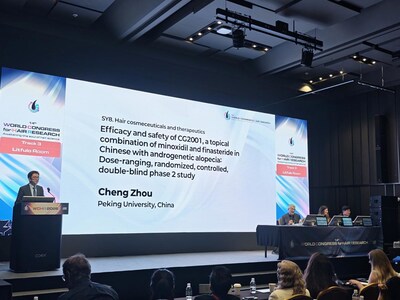
CG2001 is a topical fixed-dose combination formulation containing minoxidil and finasteride, being evaluated for the treatment of male androgenetic alopecia.
The trial consisted of the following treatment arms: CG2001 (5% Minoxidil and 0.075% Finasteride) once daily (QD); CG2001 (5% Minoxidil and 0.1% Finasteride) once daily (QD); CG2001 (5% Minoxidil and 0.075% Finasteride) twice daily (BID); and a Control Group.
The study met its primary endpoint: at Week 24, the group treated with CG2001 (5% Minoxidil and 0.075% Finasteride) twice daily demonstrated a statistically significant improvement in the change from baseline in Target Area Hair Count (TAHC) compared to the placebo group. Additionally, favorable safety and tolerability results were observed.
Key topline results include:
"Despite approved treatment options, androgenetic alopecia remains an area of significant unmet medical need. We are encouraged by the Phase II results, which support CG2001's potential as a differentiated treatment option and its continued clinical development," said Baohui Yu, CEO of Dayspring Pharma.
Dayspring Pharma is currently engaging with regulatory authorities to define the next phase of clinical development.
About CG2001
CG2001 is a topical combination of minoxidil and finasteride developed to harness the synergistic potential of two cornerstone therapies for AGA. Both are widely recognized as first-line treatments for male pattern hair loss: minoxidil promotes hair growth, while finasteride inhibits 5α-reductase and reduces dihydrotestosterone levels.
CG2001 is formulated as a specifically designed foam with an optimized dose ratio and delivery system to improve local follicular delivery, enhance efficacy, and minimize systemic exposure associated with oral finasteride.
About Dayspring Pharma
Dayspring Pharma is a pharmaceutical company focused on innovation in dermatology and hair health. The company develops differentiated therapies to address unmet clinical needs. For more information, please visit dayspringpharma.com.
Contact: Dayspring Pharma, chenguang@dayspringpharma.com
Photo - https://mma.prnewswire.com/media/2993074/image1.jpg
 View original content:https://www.prnewswire.co.uk/news-releases/dayspring-pharma-announces-positive-topline-results-from-phase-ii-clinical-trial-of-cg2001-for-the-treatment-of-androgenetic-alopecia-aga-302792544.html

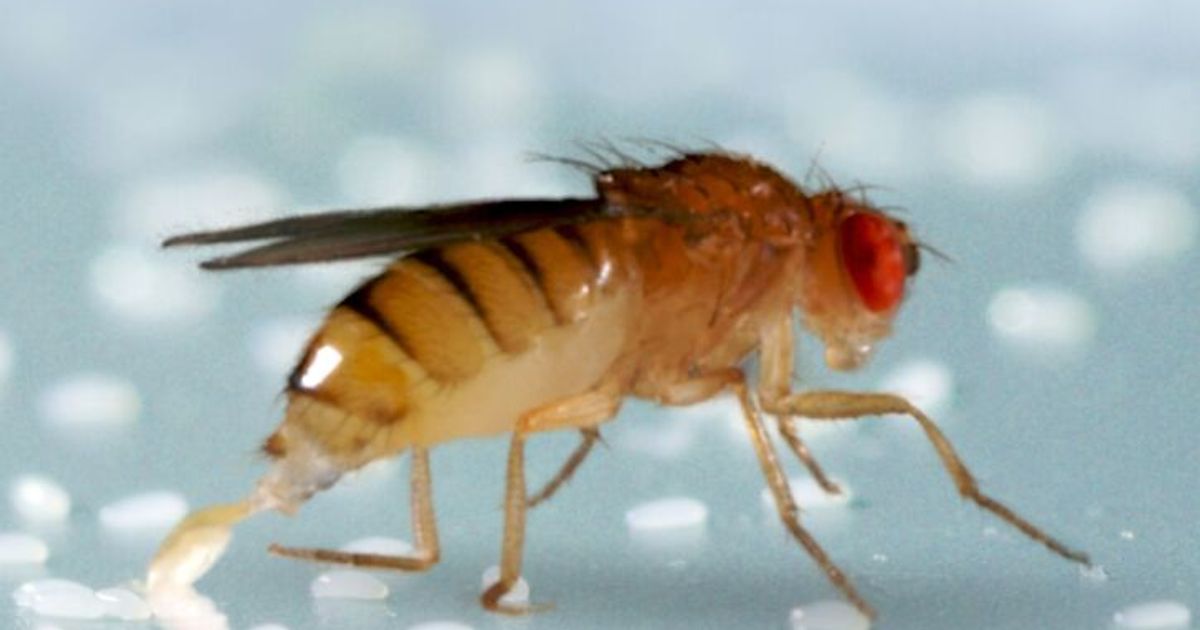
Die Artenvielfalt von Taufliegen (Drosophila) im Raum Wien ist in den vergangenen drei Jahrzehnten massiv eingebrochen. Forschende des Naturhistorischen Museums (NHM) Wien berichten, dass die Zahl der in der Stadt nachgewiesenen Arten im Vergleich zu einer Erhebung aus dem Jahr 1994 um rund 50 Prozent gesunken ist. Die Ergebnisse, die nun im Fachjournal „Ecology and Evolution“ veröffentlicht wurden, deuten darauf hin, dass vormals häufige Arten durch zugewanderte Taufliegen verdrängt worden sein könnten.
Grundlage der aktuellen Analyse ist das Citizen-Science-Projekt „Vienna City Fly“, das 2024 einfache Fliegenfallen an freiwillige Laienforscher in Wien, Niederösterreich und dem Burgenland verteilte. Die zurückgesandten Proben wurden für die nun publizierte Studie gezielt auf Fänge in unmittelbarer Nähe menschlicher Siedlungen beschränkt – also auf Innenräume, Balkone und Gärten. Damit liegt ein detailliertes Bild jener Drosophila-Gemeinschaft vor, die besonders eng an vom Menschen geprägte Lebensräume gebunden ist.
Insgesamt wurden mehr als 18.000 Taufliegen gesammelt und taxonomisch bestimmt; dabei identifizierte das Team um NHM-Forscher Martin Kapun 13 Drosophila-Arten. Bemerkenswert ist der Nachweis zweier Arten, die bislang in Österreich nicht registriert waren: Drosophila (D.) mercatorum und D. virilis. D. mercatorum ist ursprünglich in den USA, Mexiko und Südamerika verbreitet und wurde im vergangenen Jahrhundert nach Europa eingeschleppt, D. virilis stammt aus Asien und hat sich erst seit relativ kurzer Zeit über die nördliche Hemisphäre ausgebreitet.
Die Zusammensetzung der Populationen zeigt eine deutliche Verschiebung hin zu wenigen dominanten Generalisten. D. mercatorum mit rund 8.800 Nachweisen und die Modellorganismus-Art D. melanogaster mit etwa 6.700 Funden waren die mit Abstand häufigsten Spezies in den Proben. „Dominiert wird die Drosophila-Population im Wiener Stadtgebiet von Generalisten mit starker Affinität zum Menschen“, erklärte Kapun der Austria Presse Agentur zufolge. Die Ergebnisse unterstreichen, dass zunehmende Verbauung und die starke Prägung durch menschliche Siedlungen mit einem Rückgang der Biodiversität einhergehen können – auch bei unscheinbaren Insekten, die als wichtige Indikatoren für den Zustand urbaner Ökosysteme gelten.