Enterprise-wide initiative will identify, develop and scale high-impact AI opportunities to drive productivity, innovation and growth.
Nabil Hayel Saeed: "The HSA AI Lab marks the next chapter in our transformation journey. We are combining HSA's decades of experience, talent and resilience with artificial intelligence to transform how we work, how we compete and how we grow."
DUBAI, UAE, Sept. 15, 2026 /PRNewswire/ -- HSA Group has announced the launch of the HSA AI Lab, an enterprise-wide initiative designed to accelerate the adoption of responsible artificial intelligence across the business and translate AI opportunities into measurable business impact.
The Lab will identify, develop and scale high-impact AI solutions across HSA's businesses, with a focus on increasing productivity, improving decision-making, strengthening operations and creating new opportunities for growth.
The launch follows an extensive assessment of AI opportunities across the business, during which 229 opportunities were identified and subsequently narrowed to 38 priority opportunities based on their potential impact and feasibility.
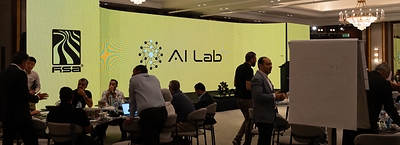
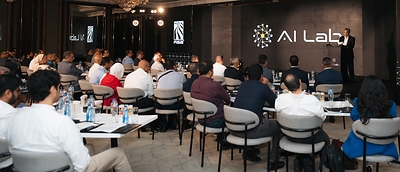
To launch the Lab and shape its priorities, HSA convened more than 40 leaders from across its businesses, sectors and functions for a two-day working session focused on moving from ideas to implementation.
The HSA AI Lab will focus on four areas: building AI capabilities across the workforce, enabling AI-powered automation, developing integrated AI systems and exploring new AI-enabled businesses.
The Lab is co-led by Mohamed Nabil Hayel Saeed and Theo Breward, who will oversee its strategy, execution and engagement with businesses across the Group.
As part of its approach, the HSA AI Lab will partner with leading AI companies, technology providers and experts from around the world, bringing the best global capabilities, expertise and innovation to HSA.
Mr Nabil Hayel Saeed Anam, Managing Director and Regional Chairman of HSA Group – Yemen, said:
"The HSA AI Lab marks the next chapter in our transformation journey. We are combining HSA's decades of experience, talent and resilience with artificial intelligence to transform how we work, how we compete and how we grow."
He added: "Our ambition is not simply to explore AI, but to turn it into measurable impact. We will use it to increase productivity, improve decision-making, strengthen our businesses and empower our people. The future will not wait—and neither will HSA."
Under the Lab's operating model, HSA businesses and functions will lead individual AI initiatives, supported by the Lab's expertise, governance and responsible AI principles to ensure AI is deployed safely, ethically and effectively across the business. The Lab builds on HSA's wider transformation journey and will help carry that progress forward by turning innovation into practical solutions and tangible business results.
About HSA Group
HSA Group (HSA), established in 1938, is one of the largest multinational conglomerates based in the Middle East. As the parent organization to over 70 operating companies, HSA employs more than 35,000 people globally. Over the past 88 years, the Group has expanded and diversified across key markets including the Kingdom of Saudi Arabia, Egypt, Yemen, the UAE, Malaysia, Indonesia, the UK, Canada and Africa, with subsidiaries operating in services, manufacturing, and commercial industries. Headquartered in the UAE, HSA is globally recognized for its well-balanced investment portfolio, efficient manufacturing systems, and market-leading products, earning its reputation as a trusted multinational, multi-billion-dollar corporation.
HSA also plays a key role in supporting development and humanitarian initiatives across the Middle East and beyond. The Group partners with UN agencies and organizations such as the World Food Programme (WFP) and the World Health Organization (WHO) to deliver public health, nutrition, and food security programs.
For nearly 90 years, HSA has embraced a values-driven approach to sustainable growth, guided by the founding philosophy of "doing well by doing good." The company's core values prioritize compassion, care for others, and a strong sense of community, shaping how it collaborates with employees, partners, and the societies it serves worldwide.
Media Contact:
Maamoun Yafi, Chief Communication Officer Email: media@hsa.com.ye
Website: hasglobal.com
 View original content to download multimedia:https://www.prnewswire.co.uk/news-releases/hsa-group-launches-ai-lab-to-drive-its-next-era-of-transformation-302879542.html

Mercedes-Benz verzeichnet ein zunehmend zweigeteiltes Bild seiner weltweiten Fahrzeugverkäufe. Während die Konzernzahlen im dritten Quartal 2026 global rückläufig waren, meldet die Indien-Tochter ein Rekordquartal. In Indien setzte Mercedes-Benz im Zeitraum Juli bis September 5.422 Fahrzeuge ab, ein Plus von 6 Prozent gegenüber dem Vorjahr und zugleich der beste Quartalswert in der Geschichte des Unternehmens im Land. Von Januar bis September summierten sich die Verkäufe dort auf 15.190 Einheiten, rund 8 Prozent mehr als im entsprechenden Vorjahreszeitraum.
Auf Konzernebene dagegen schrumpften die Auslieferungen im gleichen Quartal. Weltweit setzte Mercedes-Benz 491.700 Pkw und leichte Nutzfahrzeuge ab, ein Minus von 6 Prozent im Vergleich zum Vorjahr. Im Pkw-Geschäft allein sanken die globalen Verkäufe um 8 Prozent auf 407.200 Einheiten. Besonders belastend wirkte die Entwicklung in Asien und hier vor allem in China: In der Volksrepublik gingen die Pkw-Verkäufe um knapp ein Drittel auf 86.800 Fahrzeuge zurück, konzernweit meldete der Hersteller für Asien ein Minus von 25 Prozent auf 132.300 Autos. Ein Zuwachs in Europa und Nordamerika reichte nicht aus, um die Schwäche in China zu kompensieren.
Kontrastreich präsentiert sich auch das Bild in den oberen Preissegmenten. In Indien trugen Top-End-Luxusmodelle – darunter S‑Klasse, Mercedes‑Maybach, EQS Maybach SUV, G‑Klasse, V‑Klasse und AMG‑Modelle – maßgeblich zum Wachstum bei: Diese Klasse legte dort im Jahresvergleich um mehr als 13 Prozent zu und kam auf über ein Viertel des Gesamtabsatzes. Innerhalb dieses Segments nutzten laut Unternehmen fast drei Viertel der Kunden das MANUFAKTUR‑Personalisierungsprogramm. Die Performance-Marke AMG steigerte ihre Auslieferungen in Indien um mehr als 18 Prozent, das AMG G 63 erzielte den höchsten monatlichen Absatz seit Markteinführung. Global hingegen verzeichnete Mercedes-Benz im teuersten Segment aus S‑Klasse, Maybach und AMG ein deutliches Minus von gut 20 Prozent im dritten Quartal.
Stärker als die Verbrenner legten weltweit die batterieelektrischen Modelle zu. Vertriebs- und Marketingvorstand Mathias Geisen sprach von dem höchsten Quartalsabsatz vollelektrischer Pkw in der Unternehmensgeschichte; in Europa war nahezu jedes dritte verkaufte Auto rein elektrisch. Der elektrische GLC trug dabei überproportional zum Wachstum bei und vervielfachte seine Verkäufe gegenüber dem zweiten Quartal. In Indien setzt der Konzern seinen Fokus ebenfalls auf Elektrifizierung: Dort stehen die Markteinführung einer elektrifizierten S‑Klasse mit Auslieferungsstart Mitte Oktober sowie die Premiere des GLC BEV Anfang November an, die das Portfolio am Subkontinent weiter ausbauen sollen.
Die Transportersparte Vans erwies sich zuletzt als Stabilitätsanker. Mit einem Plus von 1 Prozent auf 84.400 Fahrzeuge hielt sich das Segment im dritten Quartal nahezu auf Vorjahresniveau. Insgesamt aber bleibt der Druck auf das Kerngeschäft hoch, da der Wettbewerb im wichtigen Markt China nach Konzernangaben intensiv und das Umfeld weiterhin schwierig ist. In dem Land gehören der GLC und die E‑Klasse zu den meistverkauften Baureihen des Herstellers und machen dort fast zwei Drittel der Pkw-Verkäufe aus. Die anhaltende Schwäche in China, die bereits im zweiten Quartal mit einem Absatzminus von rund 30 Prozent sichtbar war, unterstreicht für Mercedes-Benz die Bedeutung eines breiter diversifizierten Wachstums – mit Märkten wie Indien, in denen das Premium- und Luxusgeschäft derzeit gegensätzlich zum Trend zulegt.