- Indonesia emerges as KT&G's largest overseas production base, with annual cigarette production capacity set to reach up to 35 billion sticks, strengthening its Asia-Pacific hub
- KT&G enters the final stage of its KRW 2.4 trillion overseas CAPEX program, backed by strengthened financial stability and continued commitment to enhancing shareholder and corporate value
SEOUL, South Korea, Oct. 7, 2026 /PRNewswire/ -- KT&G (CEO Bang Kyung-man) has begun full-scale operations at its new plant in Indonesia, completing a five-country global production system spanning South Korea, Indonesia, Russia, Kazakhstan, and Türkiye.
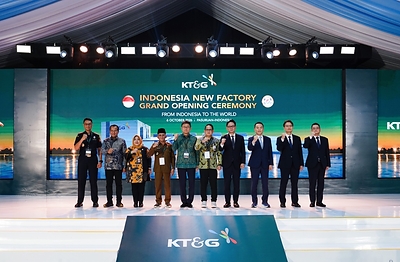
To mark the start of full-scale production, KT&G held an opening ceremony at the new plant in Pasuruan, East Java, on October 6 (local time). The event was attended by CEO Bang Kyung-man, KT&G executives and employees, Adhy Karyono, Regional Secretary of East Java Province, Yoon Soon-goo, Ambassador of the Republic of Korea to Indonesia, and other distinguished guests.
Indonesia is one of the world's major tobacco markets and an important export hub for the Asia-Pacific region. KT&G first entered the Indonesian market in 2011 through the acquisition of a local company. Since then, the company has launched ESSE, its globally leading super-slim cigarette brand, and JUARA, a brand developed specifically for Indonesia, and now ranks fourth in Indonesia's cigarette market by market share.
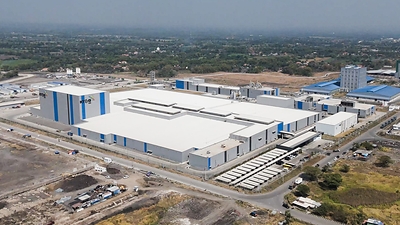
To meet growing demand in Indonesia and overseas markets, KT&G has built a new plant alongside its existing facility. Following an agreement with Indonesia's Ministry of Investment/Investment Coordinating Board (BKPM) in September 2023, the company broke ground on the new plant in April 2024 and began trial operations in the first half of 2026.
The new plant has now entered stable production. Once all nine cigarette manufacturing lines are installed, it will have an annual production capacity of up to 21 billion sticks. Combined with the existing plant's annual capacity of 14 billion sticks, KT&G's total cigarette production capacity in Indonesia is expected to reach up to 35 billion sticks, making Indonesia the company's largest overseas production base.
Leveraging Indonesia's strategic location between the Pacific and Indian Oceans, cigarettes produced at the new plant will be supplied not only to the Indonesian domestic market but also to overseas markets including Taiwan, Mongolia, Nigeria, and India. The new facility is expected to serve as a key export hub, supporting KT&G's expansion across the Asia-Pacific region and other global markets.
The construction of KT&G's new overseas plants is part of the growth investment program the company launched in January 2023. Following the completion of its new plant in Kazakhstan in April 2025 and the start of full-scale operations at the new Indonesia plant, KT&G has completed a significant portion of its previously announced KRW 2.4 trillion overseas capital expenditure program, unveiled in November 2024. Backed by strengthened financial stability, the company will continue to enhance shareholder value through share buybacks and cancellations, as well as increased dividend payouts.
Looking ahead, KT&G's four overseas production bases in Indonesia, Russia, Kazakhstan, and Türkiye are expected to have a combined annual production capacity of up to 65 billion sticks. By leveraging economies of scale and improving logistics efficiency, the company plans to increase the share of overseas production to more than 60% of its total production by 2028.
Bang Kyung-man, CEO of KT&G, said, "With the new plant in Indonesia as the final piece, KT&G has completed its large-scale overseas investment program and established a five-country global production system that will serve as a solid foundation for our global business and future growth. By strategically leveraging our production bases in Korea and overseas, we will maximize profitability, strengthen the competitiveness of our global business, and continue to increase shareholder and corporate value."
KT&G continues to expand its direct presence in global markets. The company currently operates six overseas subsidiaries in countries including Indonesia, Taiwan, Kazakhstan, and Uzbekistan, and six overseas branch offices in regions including Europe, Mongolia, and China.

 View original content to download multimedia:https://www.prnewswire.co.uk/news-releases/ktg-begins-full-scale-operations-at-new-indonesia-plant-completing-five-country-global-production-system-302900993.html

Ein umfangreicher Auswertungsbericht der Wirtschafts- und Korruptionsstaatsanwaltschaft (WKStA) zu digitalen Daten des verstorbenen Justiz-Spitzenbeamten Christian Pilnacek sorgt für neuen politischen und justizinternen Sprengstoff. Chatprotokolle, E-Mails und weitere Unterlagen zeichnen ein Bild tiefgreifender Konflikte innerhalb der Justiz – insbesondere zwischen der WKStA und Teilen der vorgesetzten Behörden. Parallel dazu bereitet ein parlamentarischer Untersuchungsausschuss die Befragung von Schlüsselpersonen vor, um mögliche politische Einflussnahmen auf Ermittlungen rund um Pilnacek und dessen Tod zu beleuchten.
Aus der von der WKStA erstellten Expertise zu Pilnaceks Kommunikationsdaten geht hervor, wie der langjährige Leiter der für Strafrecht zuständigen Sektion im Justizministerium über Jahre hinweg gegenüber der WKStA Stellung bezog. Der Bericht zeigt, dass der damalige Wiener Oberstaatsanwaltschef Johann Fuchs im Juni 2019 in einer internen Nachricht erklärte, er sehe es als Aufgabe seiner Amtszeit, eine von der WKStA angeblich offengelegte „Verkommenheit“ im Berufsstand „mit allen Mitteln zu bekämpfen“. Er bezeichnete Pilnacek darin ausdrücklich als Mitstreiter. In dem Gutachten findet sich zudem Material, aus dem hervorgehen soll, wie die Korruptionsstaatsanwaltschaft aufgelöst und neu aufgesetzt werden könnte.
Die Auswertung des Laptops und mehrerer Speichermedien Pilnaceks, die in einem rund 440 Seiten starken Bericht zusammengefasst wurde, behandelt auch seine Kontakte in das Umfeld der ÖVP. Der frühere Sektionschef war von 2010 bis 2020 über alle wesentlichen Strafsachen der Republik informiert und konnte als weisungsbefugter Beamter Ermittlungsschritte mitsteuern oder Berichte anfordern. Laut dem Bericht kooperierte er in dieser Zeit eng mit ÖVP-nahen Personen und wirkte an der Verteidigung von Beschuldigten mit. Nach Bekanntwerden einer Audioaufnahme aus dem Sommer 2023, in der Pilnacek Interventionen von ÖVP-Seite beklagte, leitete die WKStA ein Ermittlungsverfahren gegen unbekannte Täter ein; dieser Interventionsakt ist nun ebenfalls Gegenstand des U-Ausschusses.
Der Untersuchungsausschuss, der sich mit den Umständen von Pilnaceks Tod und dem Umgang der Behörden befasst, bekommt das WKStA-Dokument zeitlich passend zur nächsten Befragungsrunde vorgelegt. Zunächst soll ein IT-Experte der WKStA, der für das Auslesen von Datenträgern zuständig ist, Auskunft geben. In den darauffolgenden Tagen werden Exekutivbeamte befragt, darunter der Leiter des Bundeskriminalamts sowie zwei Polizeibeamte aus Niederösterreich, die unter anderem mit Pilnaceks Geisterfahrt Stunden vor dem Fund seiner Leiche in einem Donau-Seitenarm befasst waren. Politisch besonders im Fokus steht der Auftritt von Innenminister Gerhard Karner und dessen Kabinettschefin, nachdem eine vom Ressort in Auftrag gegebene Schulungsunterlage für geladene Auskunftspersonen parteiübergreifend – mit Ausnahme der ÖVP – auf Kritik gestoßen war.
Die Kombination aus internen Justizchats, detaillierter Datenauswertung und politischer Aufarbeitung im Parlament verschärft die Debatte über das Verhältnis zwischen Ministerien, Staatsanwaltschaften und Parteien. Während die WKStA ihre Auswertungsergebnisse in den U-Ausschuss einbringt, suchen Abgeordnete nach Antworten auf die Frage, ob und in welchem Ausmaß versucht wurde, auf Ermittlungen Einfluss zu nehmen – sowohl in prominenten Wirtschafts- und Korruptionsfällen als auch im Zusammenhang mit den Untersuchungen nach dem Tod eines der einflussreichsten Justizbeamten der vergangenen Jahre.