LONDON, Sept. 17, 2026 /PRNewswire/ -- Markel Insurance, the insurance operation within Markel Group Inc. (NYSE: MKL), today announced the appointment of Nick Rugg as Head of Financial Institutions & Fintech – PFR & Cyber within its London-based specialty insurance operation, with immediate effect.
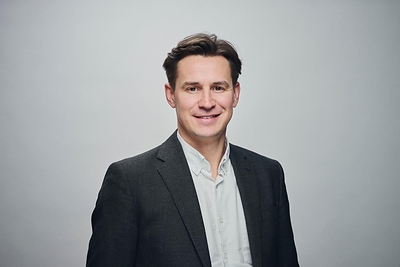
Reporting to Martin McCarron, Director of Financial Institutions and Management Liability, International, Rugg will lead the team providing professional indemnity, directors' and officers' liability, crime and cyber coverage across four product lines: Investment Managers, Fintech, Traditional Financial Institutions and Offshore Financial Institutions.
This follows Bhavik Desai's appointment as Managing Director of PFR & Cyber in London and is the latest leadership development within the division.
Rugg said: "Fintech has moved from being an emerging segment to an established part of the financial services market. As businesses have scaled and the range of business models has expanded, their insurance needs have become more varied. Markel entered the market early, so we have seen that development first-hand and built considerable specialist experience alongside it.
"I look forward to working with our underwriting team, brokers and clients to develop the wider Financial Institutions portfolio. We will continue to strengthen our position as a leading partner to financial services businesses across our four product lines."
Desai added: "Nick has played a key role in building Markel's Fintech product suite, designed for businesses whose exposures cut across professional liability, directors' and officers' liability, crime and cyber risk. This includes Markel's early move to provide blended cyber FI coverage across its Fintech and investment management products, an approach that's helped establish Markel as a leading insurer for Fintech and investment management sectors.
"His product expertise, broker relationships and experience in developing these portfolios give him a strong foundation to lead the wider team. In this expanded role, Nick will bring that experience across the wider financial institutions portfolio, with a focus on developing products that respond to the way financial services risks are continuing to converge."
Rugg joined Markel in 2014 as an underwriter in the financial institutions team and has since held senior underwriting positions, most recently as Head of Fintech and Investment Management Insurance. He has more than 20 years of underwriting experience and previously worked as a financial institutions underwriter at Arch Europe.
About Markel Insurance
We are Markel Insurance, a leading global specialty insurer with a truly people-first approach. As the insurance operations within the Markel Group Inc. (NYSE: MKL), we leverage a broad array of capabilities and expertise to create intelligent solutions for the most complex specialty insurance needs. However, it is our people – and the deep, valued relationships they develop with colleagues, brokers and clients – that differentiates us worldwide.

 View original content to download multimedia:https://www.prnewswire.co.uk/news-releases/markel-international-appoints-nick-rugg-to-head-of-financial-institutions--fintech--pfr--cyber-international-302880620.html

Die Österreichischen Bundesbahnen (ÖBB) holen den Bahnhofskomplex Wien-Mitte nach rund zwei Jahrzehnten wieder vollständig in den eigenen Konzern zurück. Der Aufsichtsrat der ÖBB-Infrastruktur AG hat dem Rückkauf des Areals, das 2005 an die damalige BA/CA-Gruppe verkauft worden war, zugestimmt. Verkäufer ist nun eine Investorengruppe unter Führung von Morgan Stanley Real Estate Investing. Neben den Bahnanlagen umfasst die Transaktion auch das Einkaufszentrum "The Mall" sowie umfangreiche Büroflächen. Über den Kaufpreis wurde Stillschweigen vereinbart; der Abschluss steht noch unter dem Vorbehalt der kartellrechtlichen Genehmigung und ist für Ende Dezember geplant.
Mit der Übernahme würden Immobilie und Bahninfrastruktur erstmals seit mehr als zwanzig Jahren wieder in einer Hand zusammengeführt. Wien-Mitte ist gemessen an den Fahrgastzahlen der viertgrößte Bahnhof Österreichs und ein zentraler Verkehrsknoten, an dem sich S-Bahn, mehrere U-Bahn-Linien sowie der Flughafenzug CAT treffen. Täglich halten nach Angaben der ÖBB fast 600 Züge an dem Standort. Bahnanlagen und Gebäude seien baulich und technisch eng miteinander verbunden, heißt es. Künftige Änderungen an Zugängen, Stiegen, Belüftung oder Leitungen müssen damit nicht mehr mit einem externen Immobilieneigentümer abgestimmt werden.
Die ÖBB sehen in dem Rückkauf einen strategischen Schritt, um die Entwicklung des Standorts aus einer Hand zu steuern. Das soll zusätzlichen Handlungsspielraum für die kommenden Jahrzehnte schaffen, in denen die derzeit modernisierte S-Bahn-Stammstrecke mehr Züge aufnehmen soll. Die Funktion des Standorts als Bahnhof soll nach Angaben des Unternehmens wieder stärker im Namen, an den Zugängen und in der architektonischen Gestaltung zum Ausdruck kommen. Für die bestehenden Mietverhältnisse im Einkaufszentrum und in den Büros kündigte die ÖBB an, dass diese unverändert weitergelten.
Wien-Mitte blickt auf eine lange und wechselvolle Geschichte zurück. Der Standort wurde 1848 als Bahnhof Hauptzollamt eröffnet und ging 1934 in das Eigentum der Bahn über. Ab den späten 1950er-Jahren entstanden über den Gleisen unter anderem ein Bürotrakt und eine Markthalle, bevor die Liegenschaft 2005 veräußert wurde. Die spätere Entwicklung des Areals war von intensiven öffentlichen Debatten begleitet, unter anderem wegen geplanter Hochhäuser mit bis zu 97 Metern Höhe und der Diskussion um mögliche Auswirkungen auf den UNESCO-Welterbestatus. Mit der nun geplanten Re-Integration in den ÖBB-Konzern verknüpft das Unternehmen die Aussicht, die verkehrliche Rolle des Standorts und die bauliche Entwicklung langfristig aufeinander abzustimmen.