BERLIN, Sept. 4, 2026 /PRNewswire/ -- This September, Poposoap brought a complete DIY water-garden experience to Global Connect Show @ IFA 2026, demonstrating how different water-feature products can work together to create an attractive, functional outdoor water garden with straightforward installation and a high degree of customization.
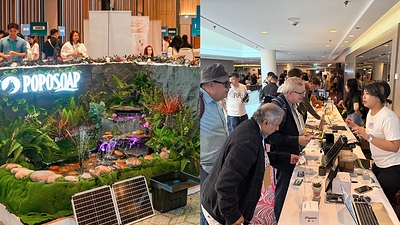
The water garden brought together a pond, a solar fountain pump, and a solar waterfall pump kit into one integrated outdoor setup. Poposoap used the installation to demonstrate how users can move from an empty outdoor space to a complete water-garden scene through a flexible, DIY-friendly approach. The display also drew interest from international media attending GCS @ IFA 2026, which brought together more than 50 brands and around 200 media representatives and KOLs. Attending media came from markets including the United States, Germany, France and Spain. The Berlin showcase also built on Poposoap's earlier participation in Global Connect Show Shenzhen in June, where the brand showcased its solar-powered water-feature solutions and received the Best of GCS 2026 Award.
The installation journey began with Poposoap's Rigid Preformed Plastic Pond. As the name suggests, the pond is pre-shaped, which means users don't have to worry about cutting, folding or shaping flexible liners to build a pond from scratch. Users can simply excavate an area that matches the pond's shape and place it into position. Its rigid structure helps maintain its shape under water pressure, while built-in planting zones make it easier to create a more natural pond ecosystem.
Bringing the pond to life was Poposoap's Solar Fountain Pump. The system is solar-powered and supported by a rechargeable battery backup, while its flexible configuration allows users to introduce movement, natural sound and different fountain patterns without relying on complicated outdoor electrical installation. The battery backup helps extend operation beyond periods of direct sunlight, including during cloudy conditions and into the evening. The pump also enhances the overall pond experience by creating a more inviting environment for birds and other wildlife.
Poposoap's Solar Waterfall Kit completed the setup, transforming the simple pond into a more immersive water feature. In addition to adding moving water and natural sound, the kit provides circulation and filtration, reducing the need for users to source and assemble multiple separate components when creating a complete waterfall system.
Ruby Ling, CEO of Poposoap, said, "We want to make water gardening easier for everyone. Water gardening shouldn't feel complicated. We want to remove the practical barriers that can make people hesitate to create their own water features, while giving them the flexibility to build something that fits their space."
Poposoap officially expanded into the European market in March 2026, entering the U.K. and Germany. The move builds on its growing international recognition, including a French Design Award, while its 40W Filtration Fountain was nominated for the 2026 German Innovation Award. Poposoap's appearance at GCS @ IFA 2026 this September marks another step in its European expansion and growing engagement with consumers, international media and the broader water-gardening community.
About Poposoap
Poposoap is a garden water-feature brand providing modular solutions for ponds, fountains, waterfalls, filtration and outdoor water gardens. Inspired by nature, Poposoap focuses on making water features simpler to install, easier to maintain and more accessible for everyday users. Through solar-powered and eco-conscious solutions where applicable, the brand helps users create tranquil, sustainable and wildlife-friendly outdoor spaces. For more information, visit www.poposoapsolar.com.
Press Contact
Fay Liu
fay@poposoapsolar.com
+1 877-947-8577
 View original content to download multimedia:https://www.prnewswire.co.uk/news-releases/poposoap-showcased-a-complete-solar-powered-water-garden-at-the-global-connect-show--ifa-2026-302869903.html

Der bewaffnete Juwelenraub im Wiener Museum für angewandte Kunst (MAK) vom 27. August ist nach Einschätzung externer Fachleute nicht auf Versäumnisse der Institution zurückzuführen. Ein 34 Seiten umfassendes Gutachten des Sicherheitsconsulting-Unternehmens LifeLine's kommt zu dem Schluss, dass das Haus sowohl bei den technischen Sicherheitsvorkehrungen als auch beim operativen Vorgehen während des Überfalls und im anschließenden Krisenmanagement korrekt gehandelt hat. Die zentrale Frage, ob das Ereignis sicherheitstechnisch und organisatorisch adäquat bewältigt wurde, beantworten die Gutachter mit einem „klaren Ja“.
Im Fokus der Untersuchung stand die Ausstellung „Glanzstücke. Van Cleef & Arpels High Jewelry x Masterpieces from the MAK Collection“, in deren Juwelenraum zwei bewaffnete Täter mitten am Nachmittag eine Vitrine einschlugen und mit einem historischen Diamantcollier flüchteten. Laut Bericht waren alle mit den Vertragspartnern vereinbarten Sicherheitsstandards und Normen erfüllt. Dazu zählten unter anderem der Einsatz von 185 Videokameras, einer dreistelligen Zahl von Alarmsensoren, speziellem Sicherheitsglas sowie geschultem Sicherheitspersonal. Der nach der Tat eingeführte Einsatz von Metalldetektoren war laut Gutachten zuvor weder verlangt noch durch bestehende Standards vorgesehen.
Besonders hervor hebt der Bericht die bewusste Entscheidung für den Vorrang des Personenschutzes vor dem Objektschutz. Aus diesem Grund verzichtete das Museum auf laute Alarmsignale während der Öffnungszeiten und auf bewaffnete Sicherheitskräfte im Ausstellungsbereich. Die direkte Alarmierung von Polizei und hauseigener Sicherheitszentrale wurde den Angaben zufolge um 14:01:22 Uhr ausgelöst und habe „optimal und effizient“ funktioniert. Auch das Verhalten der anwesenden Securitas-Mitarbeitenden wird positiv bewertet: Sie hätten eine unmittelbare Konfrontation mit den bewaffneten Tätern und damit das Risiko einer Eskalation, etwa durch Panik oder mögliche Geiselnahmen, vermieden.
Die Gutachter kommen insgesamt zu dem Befund, dass ein von professionellen Tätern geplanter und durchgeführter Raub unter regulären Öffnungsbedingungen mit „vernünftigen Mitteln“ nicht vollständig zu verhindern gewesen sei – selbst bei Einsatz moderner Überwachungstechnik und etablierter Sicherheitsprotokolle. Aus ihrer Sicht bestätigt der Fall eine bekannte Grenze musealer Schutzkonzepte: Absolute Sicherheit wäre nur um den Preis massiver Einschränkungen der Bewegungsfreiheit von Besucherinnen und Besuchern zu erreichen, formuliert das Gutachten sinngemäß. Das MAK wird damit für den konkreten Vorfall entlastet, auch wenn der spektakuläre Coup die Debatte über Sicherheitsstandards in Ausstellungshäusern neu anheizen dürfte.