Humour-led campaign invites men to share the nickname they use for their penis to spark conversations about penile cancer
LONDON, March 12, 2026 /PRNewswire/ -- New polling of UK men1 for The Urology Foundation, reveals that while around 80% of UK men have a nickname for their penis, only 1 in 10 have heard of penile cancer and its symptoms.
The #NameIt campaign aims to tackle this gap by breaking one of the last remaining intimate health taboos and encouraging men to talk more openly about changes to their penis. Greater awareness and earlier conversations can help men recognise potential warning signs sooner, when treatment is most effective.
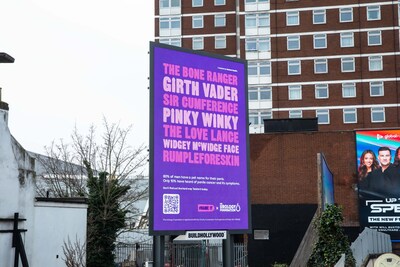
Sir Stephen Fry, Ambassador of The Urology Foundation, is proud to back the campaign and has released a video of support stating: "From 'Girth Vader' to 'John Thomas' and 'My Little Friend', the list of nicknames men have for their penis goes on. Yet while around 80% of men have a nickname, only 10% have heard of penile cancer and its symptoms. Know what's normal for you, check regularly, and if you spot something, speak to your doctor. Name it. Tackle it today."
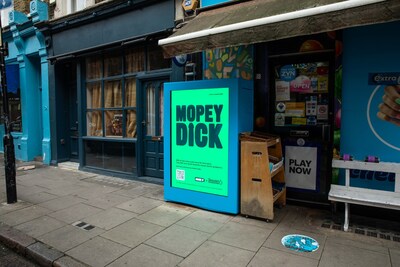
Running across OOH sites, digital channels and social platforms throughout March, the campaign uses humour-led creative to overcome embarrassment, a key barrier preventing many men from discussing intimate symptoms or seeking help.
Penile cancer is rare but rising, with more than 760 men diagnosed in the UK each year. Most cases are seen in men aged over 50 but an increasing number of younger people are now being diagnosed and should be aware of the signs and symptoms.
This bold, cheeky campaign leverages new insight to cut through stigma and drive early action and awareness around a disease where delays can have serious consequences. The campaign site includes an online Pecker Checker, designed to help men recognise what's normal, understand warning signs, and know when to speak to a GP, and a name generator for those in the 20% who haven't got a nickname.
Rebecca Porta, Chief Executive of The Urology Foundation, said, "Our survey highlights that many men can name and talk humorously about their penis, but far fewer know about penile cancer. Penile cancer is rare, but an early diagnosis can significantly improve patient outcomes. Knowing what is normal for you and acting on changes quickly can make a huge difference. We are choosing to speak openly because this is a little-known cancer that urgently needs to be on people's radar. We've heard from experts, patients and their families for many years about the need for greater awareness of penile cancer and we're using this campaign to kick-start real conversations among men. We needed a bold, creative campaign that cuts through taboo and meets men where they already are; using humour and familiarity to start a conversation about something very serious."
The charity hopes that this bold and creative campaign will grab men's attention and get the nation talking about penile health, recognise that penile cancer exists and get to know what's normal for them.
Ref: Survey of 2000 males aged 18+ in the UK carried out by One Poll on behalf of The Urology Foundation, 29 January 2026 – 4 February 2026.
For more information please contact lthorne@theurologyfoundation.org or call 07725031880
Notes to editor
Campaign details
About penile cancer
Find more information here: https://www.theurologyfoundation.org/urology-health/male-reproductive-organs-conditions/cancer-of-the-penis-penile-cancer/
About The Urology Foundation
As the UK's only charity representing all urology diseases including prostate, bladder kidney, penile and testicular cancers and non-malignant conditions such as incontinence, erectile dysfunction, urinary tract infections and kidney stones, our vision is for everyone to benefit from excellent urology health. We are revolutionising urology care for the benefit of those living with a urology condition and their families. We do this in three ways:
The Urology Foundation can offer journalists:

Video - https://mma.prnewswire.com/media/2931841/NameIt_campaign_video.mp4
Video - https://mma.prnewswire.com/media/2931842/The_Urology_Foundation_ambassador_Sir_Stephen_Fry_shares_his_message.mp4
Photo - https://mma.prnewswire.com/media/2931837/The_Urology_Foundation.jpg
Photo - https://mma.prnewswire.com/media/2931838/ShepherdsBushRoundabout_BUILDHOLLYWOOD.jpg
Photo - https://mma.prnewswire.com/media/2931839/LeonardStreet_BUILDHOLLYWOOD.jpg
Photo - https://mma.prnewswire.com/media/2931840/Avalere_Health.jpg


Wohnen in Österreich ist zum Jahresende 2025 erneut teurer geworden. Laut aktuellen Zahlen der Statistik Austria stiegen die durchschnittlichen Wohnkosten für Hauptmietwohnungen im vierten Quartal auf 10,4 Euro pro Quadratmeter inklusive Betriebskosten. Ein Jahr zuvor hatte der Quadratmeter noch 9,9 Euro gekostet. Damit legten die Wohnkosten binnen zwölf Monaten um 4,6 Prozent zu; gegenüber dem dritten Quartal ergibt sich ein Plus von 1,6 Prozent. Die Marke von zehn Euro pro Quadratmeter wurde damit nicht nur erreicht, sondern übers Jahr 2025 hinweg durchgehend überschritten.
Im Schnitt zahlten Haushalte für eine Hauptmietwohnung im Schlussquartal 2025 monatlich 686,8 Euro. Im vierten Quartal 2024 waren es noch 662,9 Euro. Von den aktuellen Gesamtkosten entfielen 172,5 Euro auf Betriebskosten, das entspricht rund 2,6 Euro pro Quadratmeter. Diese Betriebskosten erhöhten sich gegenüber dem Vorquartal um 1,3 Prozent. Die reinen Mietkosten lagen bei 7,8 Euro pro Quadratmeter. Nach Angaben von Statistik-Austria-Generaldirektorin Manuela Lenk bewegen sich die Durchschnittsmieten damit seit Jahresbeginn 2025 konstant im zweistelligen Euro-Bereich, wenn man die Betriebskosten einrechnet.
Die Auswertung basiert auf hochgerechnet rund 1,8 Millionen Hauptmietwohnungen in Österreich. Knapp 40 Prozent davon entfallen auf Genossenschaftswohnungen, rund 15 Prozent auf Gemeindewohnungen. Etwa ein Drittel (31,2 Prozent) der Mietverhältnisse wird auf dem privaten Markt frei vereinbart. 13,4 Prozent der Mieterhaushalte zahlen einen Richtwertmietzins, weitere 1,3 Prozent unterliegen dem sogenannten Kategoriemietzins. Diese Struktur spiegelt sich regional unterschiedlich wider: In Wien ist der Anteil an Richtwertmieten mit 21,0 Prozent am höchsten, gleichzeitig ist hier der Anteil privater Hauptmieten auf dem freien Markt mit 22,0 Prozent am niedrigsten.
In anderen Bundesländern dominieren andere Mietformen. In Vorarlberg, Tirol und Salzburg überwiegen private Mietverträge auf dem freien Markt; Vorarlberg kommt hier auf einen Anteil von 55,4 Prozent, Tirol auf 52,0 Prozent und Salzburg auf 48,0 Prozent. Im Burgenland und in Oberösterreich stellen dagegen Genossenschaftswohnungen die Mehrheit: 70,4 Prozent der Hauptmietwohnungen im Burgenland und 58,5 Prozent in Oberösterreich entfallen auf diese Kategorie. Auch bei den absoluten Kosten zeigen sich Unterschiede: Laut Statistik Austria liegen die Wohnkosten pro Quadratmeter in Salzburg mit 12,2 Euro am höchsten, im Burgenland mit 7,7 Euro am niedrigsten. Insgesamt belegen die Daten, dass die Mietbelastung österreichweit zunimmt – wenn auch auf einem unterschiedlichen Ausgangsniveau je nach Region und Mietform.

 View original content:

