SEOUL, South Korea, April 24, 2026 /PRNewswire/ -- Daewoong Pharmaceutical (Co-CEOs Seongsoo Park and Changjae Lee) announced that it successfully hosted its global medical education program, the NABOTA Master Class (NMC) Spring in Korea.
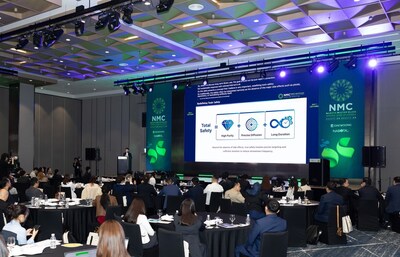
The three-day program, held from April 13 to 15, 2026, brought together 74 healthcare professionals from 13 countries—including Thailand, Brazil, and Chile—and took place across multiple venues, including Mercure Seoul Magok, COEX Magok, Ewha Womans University Seoul Hospital, and Daewoong's Hyangnam manufacturing facility.
NMC is an educational platform designed to enhance physicians' capabilities and promote academic exchange in response to the growing global demand for botulinum toxin procedures. This year's program centered on the brand message "SAFETY ON, BEAUTY ON," highlighting PrabotulinumtoxinA's safety and quality through a wide range of activities, from scientific sessions to facility tours. As aesthetic procedures increasingly shift toward high-dose and repetitive treatments, consistent safety has emerged as a critical benchmark in clinical practice.
The first day's lecture sessions, themed "Evidence & Safety," featured presentations from leading experts, including Dr. Hosung Choi (Lieul Clinic, Seoul) on global trends, advanced injection techniques, and safety in botulinum toxin treatments; Dr. Wonwoo Choi (Wells Dermatology Clinic, Apgujeong) on diffusion characteristics and duration across different toxins based on global data; and Dr. Jaeyoon Jung (Oaro Dermatology Clinic, Nowon) on synergistic combination treatments using NABOLIFT, NABOGLOW, and calcium hydroxylapatite (CaHA), along with real-world clinical applications.
The session concluded with a global panel discussion chaired by Dr. Choonshik Yoon (Yemiwon Dermatology Clinic), featuring key opinion leaders from APAC and Brazil—Dr. Hsin-Hung Chen, Dr. Hardiono Teddy Saputra, Dr. Siriyupa Kaosaypan, and Dra. Renata Primavera—who shared clinical cases and regional treatment trends. The session, titled "Why Botulinum Toxin Type A?", drew strong interest as it highlighted PrabotulinumtoxinA's differentiation and competitiveness among various botulinum toxin products.
One of the program's most distinctive components was the anatomy session, designed to enhance precision and safety in toxin injections. Prof. Seung-Ho Han of Ewha Womans University, Vice President of the International Federation of Associations of Anatomists (IFAA), led cadaver-based training and face-painting sessions to demonstrate facial anatomy and layer-specific injection points. This was followed by live demonstrations of NABOLIFT and NABOGLOW via real-time broadcast, along with 1:1 hands-on training in small groups. Eight expert instructors—including Dr. Seongmin Noh (Benjamin Clinic), Dr. Jeesoo Kook (It's Me Clinic, Ansan), Dr. Kyungtae Bae (It's Me Clinic, Sejong), Dr. Youngwoon Park (Villa de Skin Dermatology Clinic), and Dr. Hyoseung Jang (Pieobom Clinic, Gangnam)—participated, earning positive feedback for delivering an immersive, practice-oriented learning experience.
PrabotulinumtoxinA's proprietary techniques, NABOLIFT and NABOGLOW, attracted significant attention from both domestic and international participants. NABOLIFT focuses on lifting and contouring by targeting the muscle layer, while NABOGLOW enhances skin texture, tone, and pore appearance by targeting the dermal layer. Sessions sharing practical know-how and real clinical experiences received particularly strong engagement.
Dr. Hardiono Teddy Saputra, Director of Rejuvenated Clinic in Indonesia, commented, "This program went beyond simple demonstrations, offering valuable insights by sharing practical techniques and know-how that can be directly applied in real clinical settings. In particular, the well-integrated combination of live demonstrations and hands-on training significantly enhanced our understanding of the procedures."
The tour of Daewoong's Hyangnam manufacturing facility was another key highlight. Participants explored both the existing and new production sites, gaining firsthand insight into PrabotulinumtoxinA's quality control system and manufacturing infrastructure. Through exposure to aseptic processes, key production equipment, and automated logistics systems, attendees were able to appreciate the robust manufacturing capabilities underpinning Botulinum Toxin Type A's safety and reliability.
Junsoo Yoon, Head of NABOTA Business Division at Daewoong Pharmaceutical, stated, "This year's NMC was designed to consistently reflect our core value of 'Safety' throughout the program, allowing global healthcare professionals to experience it firsthand. Moving forward, we will continue to strengthen our brand competitiveness and global leadership through differentiated academic platforms that expand Botulinum Toxin Type A's proprietary techniques and clinical expertise."
Photo - https://mma.prnewswire.com/media/2964917/Photo__Overview_of_the__NMC_Spring_in_Korea__event.jpg
Logo - https://mma.prnewswire.com/media/1676530/5935663/Daewoong_Pharmaceuticals_Logo.jpg
 View original content:https://www.prnewswire.co.uk/news-releases/daewoong-pharmaceutical-hosts-nabota-master-class-highlighting-safety-amid-growing-demand-for-high-dose-repetitive-treatments-302752527.html

Mit einem neuen Reallabor für Künstliche Intelligenz (KI) positioniert sich die USTP – University of Applied Sciences St. Pölten als einer der zentralen Standorte für angewandte KI-Forschung in Niederösterreich. Das Land unterstützt das Gesamtprojekt mit einem Volumen von 1,2 Millionen Euro mit rund 600.000 Euro und verankert das Labor in einem breiter angelegten KI-Forschungsschwerpunkt. Insgesamt stellt Niederösterreich laut Landesangaben 6,35 Millionen Euro für KI-Initiativen bereit, darunter mehr als 20 Studiengänge mit KI-Bezug, zwei Stiftungsprofessuren zu Gesundheit und Landwirtschaft sowie zusätzliche Forschungsförderungen.
Im KI-Reallabor laufen die leistungsstärksten KI-Anwendungen der Hochschule. Die Einrichtung kombiniert Infrastruktur, wissenschaftliche Expertise und Demonstrationsumgebungen und versteht sich als offener Begegnungsraum. Ziel ist es, Studierende, Forschende und Unternehmenspartner zusammenzubringen, um gemeinsam neue Anwendungen zu entwickeln – von der Erprobung neuester Modelle bis hin zu prototypischen Lösungen für Branchen wie Gesundheitswesen, Medien oder Klimaanpassung. Das Labor soll ausdrücklich nicht nur Forschungsumgebung sein, sondern reale Einsatzszenarien abbilden.
Das Konzept der Öffnung reicht über klassische Kooperationen mit der Industrie hinaus: Die Hochschule will Bürgerinnen und Bürger gezielt in den Dialog einbeziehen und Berührungsängste mit KI-Anwendungen abbauen. Laut USTP arbeiten derzeit mehr als 60 Forschende an rund 25 Projekten mit KI-Bezug, die von der Erkennung von Falschinformationen über digitale Humanismus-Projekte bis hin zu Anwendungen im Gesundheitsbereich reichen. Die Aktivitäten haben in den vergangenen Jahren zu mehreren Auszeichnungen geführt, darunter Preise beim Innovationspreis Niederösterreich.
Wie die Brücke von der Forschung zur Praxis konkret aussehen kann, zeigte die USTP auch bei der diesjährigen Social Artificial Intelligence Night (SAINT) des Departments Informatik und Security. Unter dem Motto „Beyond the Paper: Real-World in Action“ diskutierten Fachleute aus Wissenschaft, Industrie und der österreichischen KI-Community aktuelle Projekte und Einsatzfelder. Ein Schwerpunkt lag auf effizienten Sprachmodellen: In ihrer Keynote erläuterte Loubna Ben Allal, Machine-Learning-Engineer bei der Plattform Hugging Face, die Trainingsstrategien für kompakte Modelle wie SmolLM 3, die trotz geringerer Ressourcenanforderungen leistungsfähige Anwendungen ermöglichen sollen. Sie unterstrich die Rolle kleiner, effizienter Modelle für alltägliche Aufgaben wie Textklassifikation, Dokumentenzusammenfassungen oder sicheres Routing von Anfragen – insbesondere für Unternehmen, die aus Datenschutz- oder Sicherheitsgründen auf eigene, ressourcenschonende Systeme setzen.